
Sources for North Richland Hills Previous Residents
Different sources answer different parts of a North Richland Hills house history. A deed records a land transfer, while an address directory can place a household at a street number during a particular year. The most useful path begins with the present parcel, works through the recorded legal description, and then adds the household sources nearest each transfer date. Several records are regional rather than city-specific, which matters for addresses that once used Smithfield, Hurst, Richland Hills, or Fort Worth as a place name.
| Source | Years It Covers | Where Held | What It Shows |
|---|---|---|---|
| County Clerk Official Records | Certified current through 08/27/2026; beginning year not stated | Official Records Search, CountyFusion, and clerk counter | Grantor, grantee, instrument, date, document type, and legal description |
| Tarrant deed history cards | 1876-1984 | Tarrant County deed-history card search | Subdivision, block, lot, abstract, grantee, and property history |
| Historic property ledgers | 1876-1917 | Tarrant County Archives searchable PDFs | Early property entries, although handwritten text may not search |
| Tarrant tax rolls | 1850-1981 | Fort Worth Public Library microfilm | Taxpayer and land or personal-property clues, arranged by surname |
| Fort Worth criss-cross directories | 1959-1996, except 1961-1963 | Library of Congress inventory and regional library collections | Address-to-occupant and telephone clues |
| Federal census | 1850-1950 public schedules | NARA and library research databases | Household composition and residence evidence by census year |
For the most recent previous residents, begin with Tarrant Appraisal District and the County Clerk index. For a mid-century address, the deed card and criss-cross run may be the faster bridge. For an early tract, the tax-roll and archive route may be more useful than a modern street string. Names of past residents should be recorded as the type of evidence they represent, not treated as a complete household list.
North Richland Hills Deed-Card Search
The Tarrant County deed-history-card tool covers 1876 through 1984 and has a search grammar unlike the current portal. It accepts Subdivision Name, exact Subdivision Code, Block Number, Lot Group, an Abstract Number without a leading A, and a grantee in LAST, FIRST form. A subdivision-name search can return all blocks, and entering TARRANT returns subdivision names beginning with that word. These fields are often better entry points than an old North Richland Hills street address.
A card result belongs beside, not in place of, the deed image or index record. Copy its subdivision, block, lot, and abstract clues, then compare them with the TAD legal description and the recorded instrument. That comparison protects against mistaking a similar street name or a later replat for the same parcel. A street search that fails can still be recoverable through the legal land description.
Note: The current Official Records Search states a certification date, but the research did not establish one verified online start year for its modern index.
North Richland Hills Records Before 1876
The March 29, 1876 Tarrant County courthouse fire changed the meaning of an early deed trail. Archival material says that virtually all county records were lost. Entries in early Deed Record Volume A can be re-recordings rather than original filings, and some destroyed deeds were never re-recorded. A gap around that event is therefore not proof that a family or parcel disappeared.
Property ledgers held by Tarrant County Archives cover 1876-1917, while tax rolls extend back to 1850. Before 1876, use land abstracts, Archives finding aids, and Texas General Land Office original land-grant research as separate evidence paths. Anyone asking who lived here before that boundary should treat each source as a separate lead. Do not describe any North Richland Hills chain of title as continuous before 1876. The city did not incorporate until 1953, and Smithfield was annexed by 1960, so county or community labels may predate the city name.
Trace North Richland Hills Previous Owners
The backward deed trail starts with the current Tarrant Appraisal District parcel card. Save the account or georeference, situs address, primary owner, mailing address, instrument, subdivision, block, and lot. The mailing field may differ from the parcel location, so it is evidence of where tax correspondence went, not proof of who occupied the home. Then use the legal description and instrument to move into the County Clerk’s recorded-land index.
- Search the present owner as a grantee near the apparent acquisition date in the Tarrant County Official Records Search. Use the document number, subdivision, or legal description when a name alone is unclear.
- Read the purchase record and record the seller as grantor, buyer as grantee, recording date, document number, and any prior-instrument reference.
- Search that seller as a grantee in an earlier date range. This looks for the seller’s own purchase and exposes the preceding transfer.
- Repeat backward, checking both direct and reverse index paths and keeping trust, entity, spouse, and name-variant entries with the same legal description.
- When the period falls within 1876-1984, test the deed-history-card fields. For the earlier fire-era boundary, continue with ledgers, tax rolls, land abstracts, and archive help instead of assuming a missing deed is conclusive.
CountyFusion provides a separate recorded-document route, and the County Clerk counter remains an access channel when the online index, image, or OCR result is incomplete. OCR can miss handwritten or poorly scanned text. The Tarrant County Clerk also holds the real-estate record system, so a narrow request can identify an existing record without asking staff to infer a past household.
North Richland Hills Address Terms
Old property research becomes more dependable once the land terms are kept separate from a postal address. The current address may change, be abbreviated, or carry a different city label. A subdivision and lot or survey abstract usually travels more reliably through the deed, appraisal, plat, and map systems.
- Grantor
- The person, trust, or entity transferring an interest in a recorded document.
- Grantee
- The person, trust, or entity receiving that recorded interest. Searching each earlier grantor as a grantee is the backward link.
- Chain of title
- The documented sequence of transfers for one parcel. It may contain gaps, re-recordings, or related instruments rather than one unbroken list.
- Legal description
- The land identifier, commonly a subdivision, block, and lot or a survey and abstract. It is more stable than a street label for older records.
- Criss-cross directory
- An address-first directory that reverses the usual name-to-address arrangement and can place past residents at a street number.
North Richland Hills Past Households
Deeds establish a property transfer, not every person who lived there. The Fort Worth criss-cross directory run, documented from 1959 through 1996 with 1961-1963 missing, is the verified regional address-first source for finding past residents between deed dates. Search the house number and street name separately, try old street types, and preserve the directory year, page, spelling, and any volume key.
The North Richland Hills Library’s Birdsong archive adds family histories, oral histories, photographs, and local documents, but it is not a current directory. Its material can place a family or street in community context when the item date and donor description remain attached to the finding. The larger regional shelf is at the Fort Worth History Center, which holds census and city-directory microfilm, yearbooks, newspapers, maps, and library research databases. The underlying directory collections are described in the North Richland Hills Directory Book.
The Library of Congress house-history directory resource shows why city and telephone directories work best between censuses.
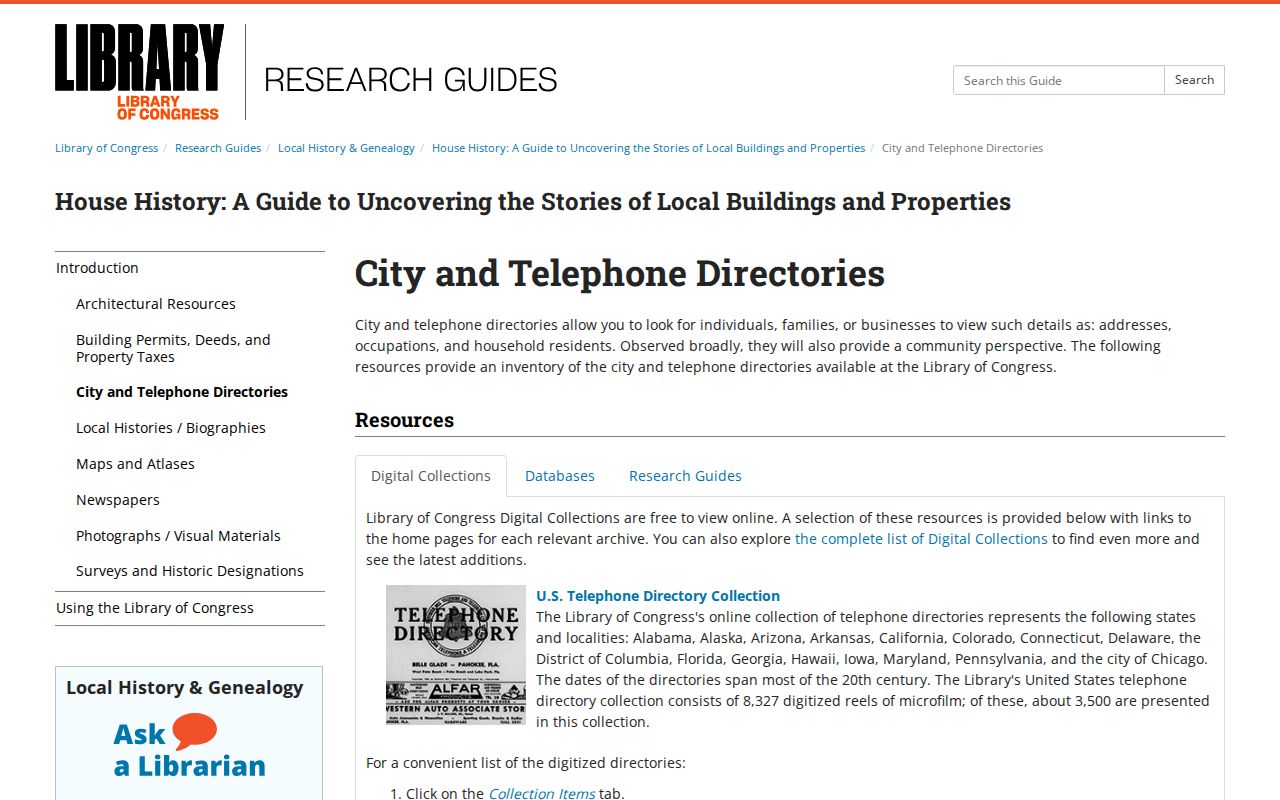
For previous residents, an address-first volume provides a dated lead that should be compared with the deed chain and later household evidence.
North Richland Hills Census Pairing
Pair an address-directory date with the nearest available federal census, but keep the source years distinct. The 1950 census is public. Later schedules follow the 72-year public-release cycle and are not generally available through the usual release process at the time of the research. Pre-incorporation people may be listed under rural precincts, Birdville, Smithfield, or another county label rather than under North Richland Hills.
- Choose a criss-cross or city-directory year closest to the deed transfer or tax-roll entry.
- Record the exact address, household name, and directory citation without turning the entry into proof of ownership.
- Compare the closest released census schedule for family composition, age, relationship, and residence information.
- Test the place-name variants and legal description when the modern municipal name produces no result.
- Use a later deed, tax roll, probate file, or obituary to decide whether an apparent departure reflects a move, a transfer, or a death.
Note: A directory omission can reflect coverage, initials, spelling, a temporary absence, or a different publication boundary rather than an empty address.
North Richland Hills Maps and Permits
Maps and plats can date a building or reconcile a modern address with an old document. No official source identifies a citywide North Richland Hills street-renumbering or readdressing project. Tarrant Archives maintains map and plan resources with plat databases, survey materials, architectural plans, a cemetery map, and Sanborn links. The 1911 Fort Worth Sanborn set is useful only where mapped; no separate Sanborn edition for every North Richland Hills parcel was located.
Tarrant County Archives Maps and Plans provides the regional map and plat entry point for an address history.
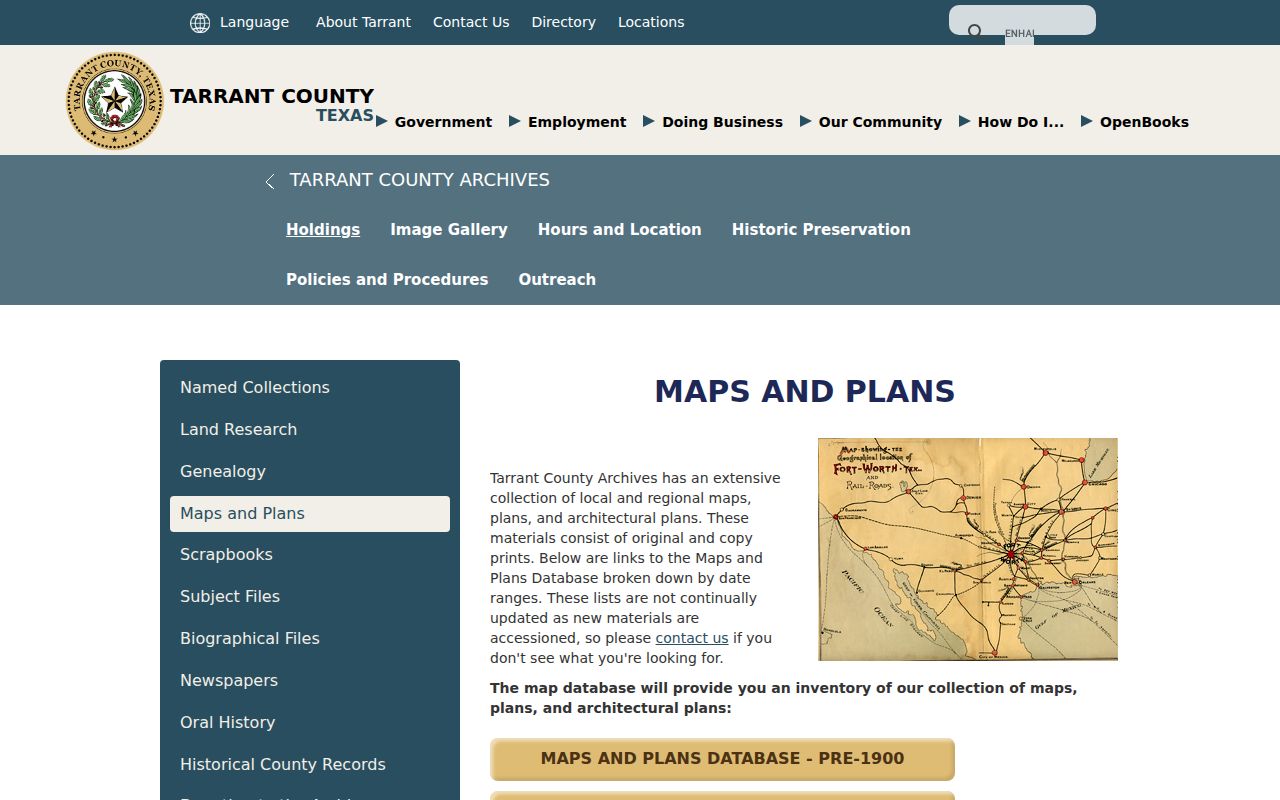
A plat or survey description links the archive parcel to the deed-card or appraisal legal description.
The North Richland Hills Archive Center and public-record search can also surface building permits, certificates of occupancy, code records, and structure-fire-loss reports by address, category, and date range. A permit applicant or contractor is a role in a project, not necessarily an owner or prior resident. When the available search is incomplete, a precise Texas Public Information Act request for existing address-and-date records is the documented fallback.
North Richland Hills Family Endpoints
When a past resident disappears from an address trail, obituaries and probate records can close a time period without guessing. An obituary can identify a spouse, children, former address, church, or funeral home. A Tarrant County probate file can identify an executor, heirs, land, debts, and disposition where the public portion is available. Those details are strongest when they agree with a later deed or tax record.
This is a useful family-history route for connecting a deceased person to an executor or later property transfer. It does not turn every name in an archive into a present-day address. The Tarrant County Archives genealogy holdings and Fort Worth History Center provide archival and library channels when a web index ends, while the County Clerk’s probate functions provide the official custodian route.
North Richland Hills Lawful House History
Researching previous residents is best kept to house history, family history, estate questions, and personal curiosity. State and county records may be incomplete, dated, or protected. A historical owner field, a directory entry, or a tax record needs its date and source kept beside it, particularly when it concerns a living person or an address near a city boundary.
Lawful use. Use North Richland Hills previous-resident records for personal, historical, and family research. Never use an address trail to monitor, harass, intimidate, or harm a person; Texas law restricts stalking and harassment.