
North Richland Hills City Directory Collections
North Richland Hills does not have a documented complete local run of printed directories. The strongest documented route is the regional shelf: Fort Worth volumes, suburban editions, address directories, tax lists, and local-memory collections. The table distinguishes a known date range from a nearby regional resource. A regional volume can include a North Richland Hills household, especially after incorporation, but the research does not establish a complete city-by-city run. Ask the holding institution to confirm a particular year and boundary before making a special trip.
| Collection | Years | Where Held | Access |
|---|---|---|---|
| Fort Worth City Directory, Morrison & Fourmy | 1950 documented issue | Fort Worth and regional collections | Confirm shelf availability |
| Polk Fort Worth and suburban directories | 1968 suburban issue; other years documented | Fort Worth History Center and licensed databases | In person or library access |
| Fort Worth criss-cross directories | 1959-1996, missing 1961-1963 | Library of Congress inventory and related regional microfilm | Request or on-site research |
| Tarrant County tax lists | 1850-1981 | Fort Worth Public Library microfilm | Surname arrangement, not indexed |
| Birdsong family histories | 1998-history materials and later donations | NRH Library digital archive | Open browsing |
A gap is part of the evidence. The 1959-1996 criss-cross run lacks 1961 through 1963, and the local research did not locate exact North Richland Hills pages for the regional titles. A missing name can reflect a different publication boundary, an irregular issue, a spelling change, a temporary move, or a listing choice. It does not prove that a household was absent.
North Richland Hills Directory Shelf
The Fort Worth History Center is the best documented regional shelf for a North Richland Hills directory search. It is at 501 E. Bolt Street in Fort Worth and provides regional genealogy and local-history help, yearbooks, newspapers, maps, local books, and library databases. Its published hours are Tuesday through Thursday, 11 a.m. to 7 p.m., and Friday through Saturday, 10 a.m. to 6 p.m. It is closed Sunday and Monday. Archive items are stored offsite, so request them at least three business days ahead; appointments are recommended.
The scale explains why the center is a useful fallback: its genealogy collection reports more than 40,000 volumes, 9,500 microfilm rolls, and 180,000 microfiche. Much of the microfilm covers United States census and city directories. Ancestry Library Edition is available at Fort Worth library locations rather than as a home subscription. Copying may be allowed, subject to fragility and copyright, while archive material remains in the building.
See the History Center's regional-services page before planning a visit.
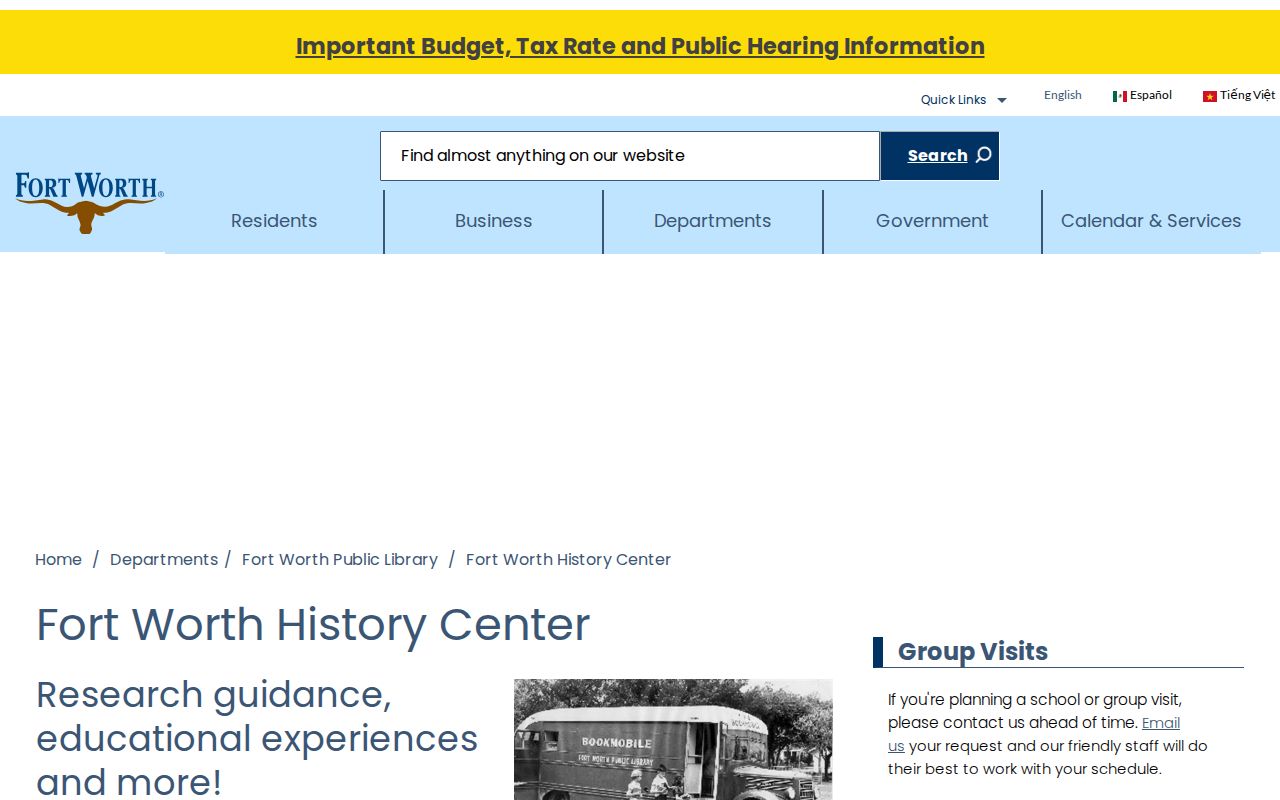
The History Center provides the regional context that the local library’s public pages do not document as a fixed directory shelf.
North Richland Hills Directory Publishers
Publisher names help target the right catalog record. A 1950 Fort Worth City Directory issued by Morrison & Fourmy is documented through the University of Texas at Arlington’s Star-Telegram collection. That volume is described as about an inch thicker than the 1949 issue and as adding 576 pages. R.L. Polk & Co. is documented in Fort Worth historic-context material for several years, including references to 1969 and 1971 editions. Polk’s 1968 Fort Worth Suburban Directory is especially relevant to the post-1953 North Richland Hills period.
These details identify regional source types, not guaranteed North Richland Hills coverage. Search catalog records by publisher, place, and date. The Library of Congress also links to a U.S. directories database collection dated 1822-1995, but local indexing and hit coverage differ by city and year. Note: A publisher title and a date are a starting point, not proof that a given household was printed in that issue.
North Richland Hills Digitized Directories
Digitized discovery begins with a source guide, then moves to the institution that holds a scan or licensed database. The Library of Congress online city-directory resources points researchers to United States city, telephone, and business-directory collections. It is helpful for locating a likely repository, but it does not establish an uninterrupted North Richland Hills digital run. Use the publisher, year, nearby place names, and variations such as Smithfield or Fort Worth when testing a catalog.
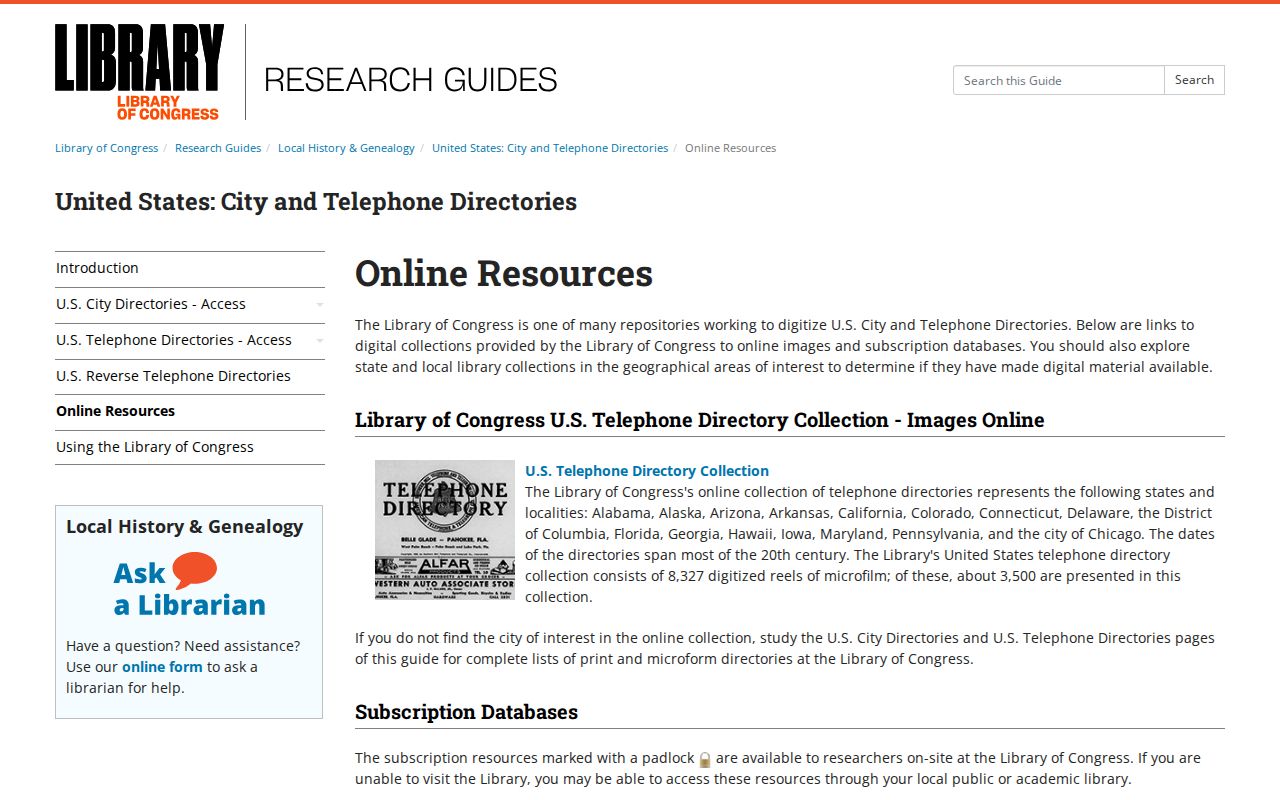
Online finding aids make a sensible first pass, while the physical regional shelf remains important when a scan, index, or exact page is unavailable.
Reading North Richland Hills City Directory Entries
No stable printed North Richland Hills entry image was available in the researched sources, so an entry should be read as a field inventory rather than as a fabricated local example. Start by preserving the exact spelling, initial, page, publisher, and year. An alphabetical listing commonly gives a surname, given name or initial, an address, and sometimes an occupation or telephone number. A spouse or another household signal can appear in parentheses or in a second listing. Publisher-specific marks may describe household status, widowhood, a telephone subscriber, or a home and business distinction.
| Name | Surname, given name, initials, and the exact printed form. |
|---|---|
| Address | House number and street, often the key to a street guide or criss-cross section. |
| Household clue | A spouse, another person at the address, widow notation, or a publisher-specific mark. |
| Occupation or telephone | A historical activity clue or telephone listing when the volume includes it. |
| Owner or renter mark | Possible status notation that must be checked against that volume’s own key. |
- Criss-cross directory
- An address-first directory that reverses the usual name-to-address route and lists occupants or telephone entries by street and number.
- Householder index
- A name arrangement focused on the household listing, useful for comparing an alphabetical entry with the street section.
- Abbreviation key
- The volume’s own explanation of shorthand. Photograph or transcribe it before interpreting any mark.
Do not carry an abbreviation from one publisher or year into another without checking the key. Directory compilation was often annual but could be irregular, and a listing may omit a person who did not respond, had a different initial, or fell outside the publication boundary. The entry is most valuable when it is saved with its surrounding context.
North Richland Hills Criss-Cross Directories
A criss-cross directory is the best historical bridge when an address is already known. The Library of Congress inventory documents a Fort Worth criss-cross run from 1959 through 1996, except 1961 through 1963. Begin with the address section, trying the house number with the street name if OCR divides a unit number or suffix. Record every householder, phone number, and notation. Then search each name in the alphabetical section of the same book to compare spelling, spouse clues, and the publisher’s description.
Use adjacent available years rather than filling a missing year by assumption. The address section can show a sequence of householders or businesses at a number, while the alphabetical section can reveal a related telephone or name variation. The 1961-1963 break is documented, so it should appear in research notes as a collection gap rather than as an unexplained household gap.
North Richland Hills Directory Geography
The volume’s city boundary matters. North Richland Hills incorporated in 1953 and annexed Smithfield in 1960. A household may appear under Smithfield, Richland Hills, Hurst, Fort Worth, or a rural route in different sources while remaining in the same general area. For a current parcel, the North Richland Hills street directory covers the modern address-keyed public-record path without repeating this historical shelf.
For the earlier period, use county tax and deed sources alongside the directory search. Tarrant County tax lists run from 1850 through 1981 and are arranged by surname rather than indexed. Pre-incorporation people can also appear in rural precincts, Birdville or Smithfield-area descriptions, so a missing modern city label is not by itself a missing resident.
Trace North Richland Hills Directory Households
Trace a household through a city directory as a sequence of dated leads. The goal is to preserve each volume’s evidence, then test the apparent move or disappearance against other records. Pair directory years with the 1940, 1950, 1960, 1970, 1980, 1990, and 2000 federal census schedule dates, while observing the 72-year public-access rule. As of the research date, 1950 is public through the normal release cycle; 1960 and later schedules are not generally public through that route.
- Find the earliest likely entry by name, street, and nearby community name.
- Copy the year, publisher, page, spelling, address, and every visible notation.
- Search the alphabetical and criss-cross portions of the same volume, when both exist.
- Move backward and forward through available issues, noting address and household changes.
- Pair each year with the appropriate census release, tax list, deed, probate, obituary, or later voter-history clue.
A disappearance can indicate a move, death, no subscriber response, irregular coverage, or a new spelling. Confirm an apparent owner through the Tarrant Appraisal District Property Search and County Clerk deed records, rather than treating a directory listing as certified proof of occupancy. Note: A directory places a name near an address and time; it does not resolve every household relationship.
North Richland Hills Directory Memory
Birdsong gives family researchers a North Richland Hills source that is different from a standardized directory. The NRH Library’s Birdsong archive reports more than 500 items, including family histories gathered for George N. Green’s history of North Richland Hills, oral histories, photographs, documents, the Clarence Jones collection, and Mid Cities Daily News photography. Its browsable materials can reconnect a surname to a place, school, event, photograph, or donated family record when the printed directory trail is thin.
This is a geography clue as well as a human one. Clarence Jones developed the subdivision that led into incorporation, and streets in the Jones subdivision were named for family members. Search a street name, subdivision, Smithfield, and a decade alongside a surname. Birdsong accepts donated local materials such as programs, club records, church or business histories, family documents, and oral-history recordings, but donor restrictions still matter.
North Richland Hills Directory Gaps
When directories stop, move to the Tarrant County Archives genealogy holdings. The Archives has more than 600 collections in a 10,000-square-foot facility at 200 Taylor Street, Suite 5200, Fort Worth. Walk-ins are accepted Tuesday through Friday from 9 a.m. to 4:30 p.m., and Mondays are by appointment. Its searchable material includes biographical files, early probate abstracts, marriage records, immigrant resources, maps and plans, cemeteries, election registers, school census, and historic ledgers.
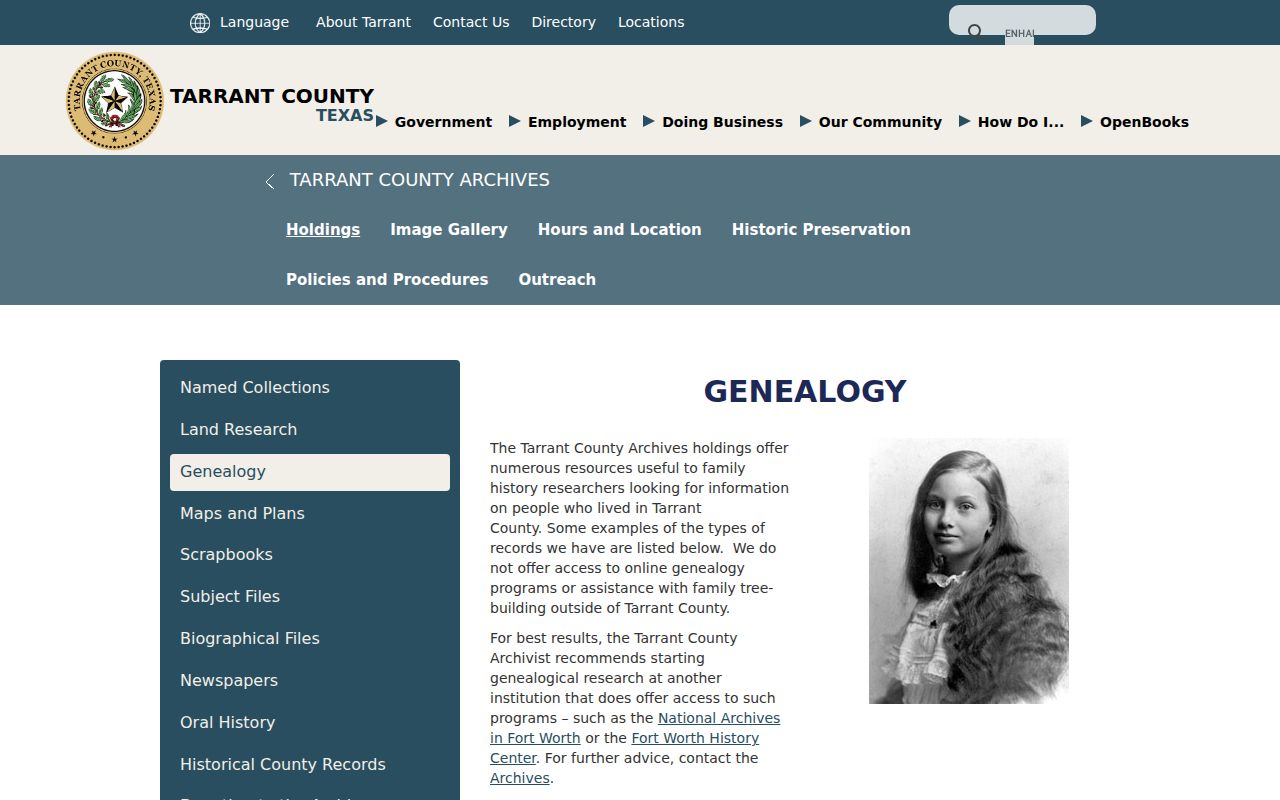
Archives material helps test a directory clue against a longer county record trail, especially where a name, community, or early address predates North Richland Hills incorporation.
The March 29, 1876 courthouse fire is a caution for deep Tarrant County research. Many county records were lost; early deed entries may be reconstructed or re-recorded, and some destroyed deeds were never re-recorded. The Archives’ historic ledgers include property records for 1876-1917 and land records for 1897-1908, while handwritten fields may not be searchable by OCR. Footprints, with issues from 1957-1997 and surname and topical indexes, can supply another lead, but transcriptions should be checked against the original or custodian.